
Glasses stop working for some people long before cataracts ever enter the conversation. Once the natural lens starts losing its flexibility with age, laser correction on the cornea isn't always the answer which is where eye lens replacement surgery comes in. It's a different procedure altogether, and understanding how it works helps you ask the right questions before booking a consultation.
What Actually Happens During the Procedure
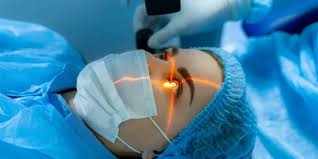
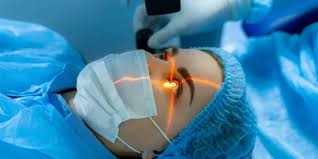
Rather than reshaping the cornea, this treatment removes the eye's natural lens and replaces it with an artificial one, tailored to your prescription. It's the same core technique used in cataract surgery, only performed before cataracts develop, which is why it's often called refractive lens exchange.
This makes eye surgery replacement lens treatment particularly suited to people over 45, whose eyes have started struggling with reading distance regardless of how strong their glasses are. Corneal laser treatment doesn't correct this type of age-related change, since the issue sits inside the lens itself, not the surface of the eye.
Who Tends to Benefit Most
Presbyopia, the gradual loss of close-up focus that comes with age, is the most common reason people look into this procedure. Long-sightedness, and certain cases where laser eye surgery isn't suitable due to prescription strength or corneal thickness, can also make lens replacement the more sensible route.
A thorough eye examination determines suitability, since lens choice, eye measurements and overall eye health all factor into whether this is the right fit for you specifically.
Types of Replacement Lenses
Not every artificial lens works the same way. Monofocal lenses correct vision at one distance, usually far away, meaning reading glasses may still be needed afterwards. Multifocal and extended depth-of-focus lenses aim to cover a wider range, reducing dependency on glasses across near, intermediate and distance vision.
Your surgeon will talk through which lens type suits your lifestyle, whether that's reading, driving, screen work or a mix of all three, since the "best" lens differs from person to person.
Recovery and What Comes After
Recovery from lens replacement tends to be quicker than many expect, with noticeable improvement within a few days for most patients. Follow-up appointments check healing progress and confirm the new lens is settled correctly, and mild irritation or light sensitivity in the early days is fairly normal.
Unlike corneal laser procedures, this treatment also removes the possibility of ever developing cataracts in the treated eye, since the natural lens responsible for cataracts has already been replaced.
Questions to Ask Before Committing
Before agreeing to treatment, it's worth clarifying a few specifics with your surgeon:
Which lens type is recommended for my eyes, and why?
What does the price include — assessment, surgery and aftercare, or are these separate?
How does this procedure differ from cataract surgery in my specific case?
What's the realistic recovery timeline for my lifestyle and work?
A surgeon willing to answer these clearly, without rushing the explanation, is generally a good sign of how the rest of your treatment will be handled.
Conclusion
Choosing between laser correction and eye lens replacement surgery ultimately comes down to age, prescription and how the eye itself has changed over time. A proper assessment is the only reliable way to know which option actually fits your eyes, rather than assuming one procedure suits everyone in the same way.



Write a comment ...